
Knee Injections in Reading — Steroid, Hyaluronic Acid and PRP
For some patients with knee arthritis or persistent knee pain, an injection can be used if appropriate to ease pain and support rehabilitation.
At Circle Reading Hospital, Mr Sam Nahas offers corticosteroid (steroid) injections. Hyaluronic acid (viscosupplementation) and platelet-rich plasma (PRP) injections can be used if appropriate.
All injections are performed under sterile conditions, often with ultrasound guidance, ensuring accuracy and comfort.
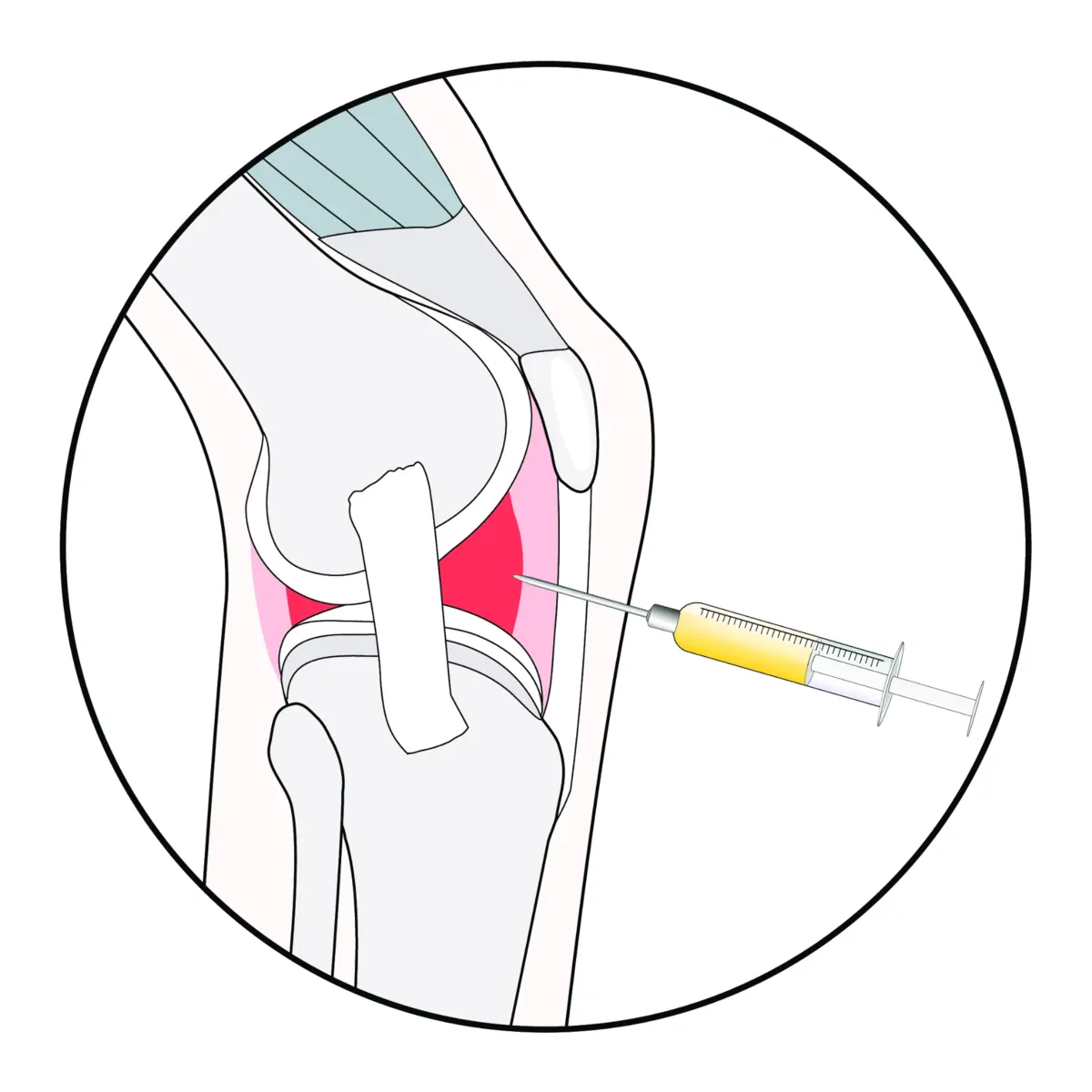
How Injections Are Used
Each option is discussed in detail during consultation, and treatment is tailored to the individual's diagnosis, activity level, and goals.
Guidance differs between injection types, and Mr Nahas will be explicit about where the evidence is strong and where it is not. NICE recommends intra-articular corticosteroid for short-term relief of osteoarthritis symptoms, but does not recommend hyaluronic acid injections, and considers the evidence for PRP in knee osteoarthritis insufficient to recommend routinely. Both remain available privately, with informed consent, where they may suit your circumstances.
Injections are often most effective when combined with targeted physiotherapy and strength conditioning.
Types of Injections Offered
Corticosteroid (Steroid) Injections
Used to reduce inflammation and swelling in the joint, particularly during arthritis flare-ups or after injury.
Provides short- to medium-term pain relief (typically several weeks to months)
Useful for reducing acute inflammation before physiotherapy
Evidence-based option for early- to moderate-stage arthritis
Hyaluronic Acid (Viscosupplementation)
Hyaluronic acid is a natural part of knee joint fluid, and in osteoarthritis its concentration and molecular weight tend to drop, making the fluid less viscous and less able to lubricate and cushion the joint.
Hyaluronic acid injections aim to improve lubrication and can provide modest pain relief for some people, though the benefit varies and isn't guaranteed.
Can be used if appropriate; the benefit varies between people
Sometimes considered for mild to moderate arthritis when surgery is not yet needed, though NICE does not recommend it and response varies between patients
Often performed under ultrasound guidance
Platelet-Rich Plasma (PRP) Injections
PRP uses your own blood, processed to concentrate the platelets. It can be used if appropriate.
Made from your own blood
Can be used if appropriate, for example in early arthritis or tendon irritation
Some patients report symptom improvement, though the evidence remains mixed and NICE does not currently recommend it routinely
What to Expect
Consultation and assessment with Mr Sam Nahas
Imaging arranged if not already completed
Injections performed in clinic with Mr Nahas or via ultrasound guidance
Mild discomfort may occur briefly during injection; downtime is minimal
Most patients can return to normal activities the next day
Follow-up arranged to assess benefit and next steps
Why Choose Mr Sam Nahas
Consultant knee-only surgeon with experience in non-operative and surgical care
Clear about where the evidence for each injection is strong and where it is limited
Access to ultrasound-guided injections for maximum accuracy
Honest, transparent discussions about expected outcomes
Integrated care model — injections, physiotherapy, and surgery available under one roof
Location
Injections are performed at Circle Reading Hospital, with access to additional private imaging and injection facilities in Reading, Wokingham, Henley, and Berkshire.